Cats in pubs


Cats in bars or restaurants are fairly common in Holland. Not so much in the US apparantly, where even the Algonquin Hotel in New York has to break with an eighty year old tradition and leash its latest lobby cat in order not to get into trouble with health and safety:

For nearly 80 years, a cat has roamed free in the lobby of New York City’s famed Algonquin hotel, but now, the New York City Department of Health and Mental Hygiene has made finding the friendly feline into a bit of a scavenger hunt.

The Algonquin has confined Matilda III, the latest in a line of lobby cats dating back to 1932, primarily to the arrival area and behind the reception desk thanks to a pre-emptive move to prevent crossing the DOH.

Restaurants have been getting tagged with hefty fine and reduced health ratings for minor violations, so the Algonquin made the move to avoid running afoul of the New York City Health Code. In a statement to TODAY.com, a rep for the DOH said: “According to the New York City Health Code, live animals are not allowed in food service establishments (except for edible fish, shellfish, or crustacean) unless a patron needs a service dog.”

I always find it a bit ironic that both the UK and the US, the two most doctrinaire free market countries in the world, also have the worst kind of rigid jobsworth government bureaucracies.

Soviet Storm


In between the reality show nonsense on the History Channel, one of the best documentary series on World War II has been shown recently. Unlike most of these series, Soviet Storm: WW2 in the East focuses exclusively on the Eastern Front and the Russian experiences in the war, which in itself is enough to recommend it to me. But it’s also very good in itself, giving a clear and honest picture of the war in the East, combining the big picture with quick sketches of what the war was like at the sharp end. Especially good is how CGI is used to enhance battle replays. It’s always clear that these are reconstructions, the CGI generated tanks and guns and such slightly plastic looking, probably deliberately, but still fairly realistic and convincing. Also counting in its favour is that it’s not too fetishist about the tanks and other weapons used in the war.

Soviet Storm was originally a Russian production, first broadcast in 2010 and this is noticeable, if only due to the Cyrillic letters shown on the maps. More seriously, it’s the way that the focus remains almost exclusively with the Soviet soldiers, showing the Germans only as the enemy, that shows its origins. Most western documentaries on the Eastern Front are shown from the German point of view, something which can minimise the very real accomplishments of the Red Army. Soviet Storm is a good corrective to this.

A lot of this series is available on Youtube; check it out.

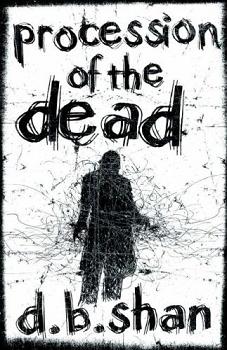
Procession of the Dead — D. B. Shan

Procession of the Dead


Procession of the Dead
D. B. Shan
312 pages
published in 2008

Never heard of D. B. Shan before I found this in the library, but the book looked interesting and that’s what libraries are for, aren’t they; discovering new authors. Judging from the back cover blurb this seemed to be a crime thriller with some fantastical elements and for once that’s what it turned out to be. It was interesting to for once go into a novel without preconceptions, without knowning anything about the author or the books he has written.

Procession of the Dead is a book about a young gangster called Capac Raimi, coming to the City to be an apprentice to his uncle, one of the small time crooks running part of the underworld. Capac has higher ambitions than that though, hoping to catch the eye of the Cardinal, the man who runs all of the underworld. The Cardinal is the City and the City is the Cardinal: “if the Cardinal pinched the cheeks of his arse, the walls of the city bruised”. And Capac does catch his eye, at the cost of his uncle’s life.

Read more…

Suspension of disbelief

John Scalzi is being a bit silly about suspension of disbelief:

“When my daughter was much younger, my wife was reading to her from a picture book about a snowman who came to life and befriended a young boy, and on each page they would do a particular activity: build a snow fort, slide down a hill, enjoy a bowl of soup and so on. The last three pages had the snowman walking, then running, and then flying. At which point my wife got an unhappy look on her face and said ‘A flying snowman? That’s just ridiculous!’

[…]

“So, yeah: In a film with impossibly large spiders, talking trees, rings freighted with corrupting evil, Uruks birthed from mud (not to mention legions of ghost warriors and battle elephants larger than tanks), are we really going to complain about insufficiently dense lava? Because if you’re going to demand that be accurate in a physical sense, I want to know why you’re giving the rest of that stuff a pass. If you’re going to complain that the snowman flies, you should also be able to explain why it’s okay to have it eat hot soup.”

No, no, you don’t.

Suspension of disbelief is a private thing and like all matters of taste cannot be discussed. If you don’t believe in flying snowmen nothing will get you to take them seriously. And while that’s a deliberately silly example, we do this all the time, whether or not it’s drawing the line at vampires that sparkle in the sunshine or at having the Force explained as being caused by socalled midichlorians. Especially when these sort of developments go against the earlier established “rules” of an universe or don’t fit the traditional tone of a (sub)genre, they can be hard to swallow. This also explains why some adaptations of e.g. Sherlock Holmes work and some don’t. The recent modern BBC updating of Holmes worked because it kept the cores of Holmes and Watson intact, but for some people it just won’t work without the Victorian fogs.

But that’s not really what Scalzi was talking about, because his original ire was awoken by a discussion about the realism of the lava at the end of the last Lord of the Rings movie. This is entirely different from not believing in flying snowmen, as this is about something that actually exists in the real world and you therefore can get wrong. Just like there was no reason for sound in space in Star Wars, there was no real reason for the lava to behave wrongly in the LotR movie, save for dramatic reasons. It’s therefore sort of acceptable in this example, but usually this sort of thing is either an error or just pure sloppiness on the part of the writer.

It’s the writer’s job to make their worlds as believable as possible — unless it’s not of course — and these sort of mistakes drop people right out. Even in a fantasy world you need to keep everyday reality straight. One commenter at James Nicolls’ place, quoting C. K. Chesterton, put it best:

“It really is more natural to believe a preternatural story, that deals with things we don’t understand, than a natural story that contradicts things we do understand. Tell me that the great Mr. Gladstone, in his last hours, was haunted by the ghost of Parnell, and I will be agnostic about it. But tell me that Mr. Gladstone, when first presented to Queen Victoria, wore his hat in her drawingroom and slapped her on the back and offered her a cigar, and I am not agnostic at all. That is not impossible, it’s only incredible. But I’m much more certain it didn’t happen than that Parnell’s ghost didn’t appear; because it violates the laws of the world I do understand.”