The big takeover

Matt Taibbi on how Wall Street is using the recession for yet another power grab. Key paragraph:

So that’s the first step in wall street’s power grab: making up things like credit-default swaps and collateralized-debt obligations, financial products so complex and inscrutable that ordinary American dumb people — to say nothing of federal regulators and even the CEOs of major corporations like AIG — are too intimidated to even try to understand them. That, combined with wise political investments, enabled the nation’s top bankers to effectively scrap any meaningful oversight of the financial industry. In 1997 and 1998, the years leading up to the passage of Phil Gramm’s fateful act that gutted Glass-Steagall, the banking, brokerage and insurance industries spent $350 million on political contributions and lobbying. Gramm alone — then the chairman of the Senate Banking Committee — collected $2.6 million in only five years. The law passed 90-8 in the Senate, with the support of 38 Democrats, including some names that might surprise you: Joe Biden, John Kerry, Tom Daschle, Dick Durbin, even John Edwards.

On this side of the Atlantic things are slightly better, but again we see how the government and the banks are conspiring together to exclude democratic controls from their decision making. Parliament has had no say in the emergency measures taken by our finance minister, while parties like the Christian Democrats are abusing the sense of urgency to force through long desired measures like raising the mandatory retirement age to 67 from 65.
IDF soldiers talk about their war crimes

That the IDF committed war crimes in their invasion of Gaza (let’s not even mention the invasion itself was a warcrime) was known on day one of the invasion. Evidence for that however only came from such unreliable witnesses as the victims themselves, or United Nations employees, or western journalists in Gaza, so it was largely rejected by Israel and its defenders. But now the Israeli newspaper Haaretz is reporting the personal experiences of IDF soldiers during the Gaza invasion and those are less easy to sweep aside:

The testimonies include a description by an infantry squad leader of an incident where an IDF sharpshooter mistakenly shot a Palestinian mother and her two children. “There was a house with a family inside …. We put them in a room. Later we left the house and another platoon entered it, and a few days after that there was an order to release the family. They had set up positions upstairs. There was a sniper position on the roof,” the soldier said.

“The platoon commander let the family go and told them to go to the right. One mother and her two children didn’t understand and went to the left, but they forgot to tell the sharpshooter on the roof they had let them go and it was okay, and he should hold his fire and he … he did what he was supposed to, like he was following his orders.”

According to the squad leader: “The sharpshooter saw a woman and children approaching him, closer than the lines he was told no one should pass. He shot them straight away. In any case, what happened is that in the end he killed them.

“I don’t think he felt too bad about it, because after all, as far as he was concerned, he did his
job according to the orders he was given. And the atmosphere in general, from what I understood from most of my men who I talked to … I don’t know how to describe it …. The lives of Palestinians, let’s say, is something very, very less important than the lives of our soldiers. So as far as they are concerned they can justify it that way,” he said.

The IDF has ordered an internal probe into these allegations. This always is a great comfort to victims of Israeli aggression, as without exception it turns out they weren’t shot, it was all a big misunderstanding or just an innocent little mistake.

A modest proposal: nationalise the bankers

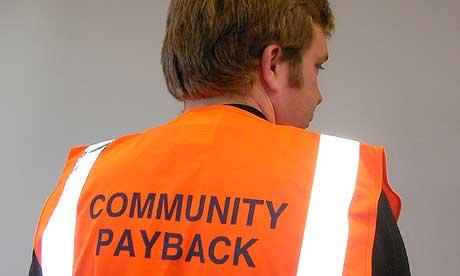
what every well dressed banker would wear under my proposal

Though it would undoubtly be cartartic to enact the solution proposed by the Financial Times to the current economic crisis, to shoot the bankers, nationalise the banks, we should not let our emotions get the better of us. We need practical solutions, not rash action.

The economic crisis cannot be solved with a single act; it’s a crisis of capitalism and only radical change can solve this crisis. But we can make a start at solving two of the most pressing short term problems facing us: the need to punish the people responsible for the crisis and the need of our governments for large amounts of money to combat the crisis with.

The solution is simple: nationalise the bankers. Every banker and retired banker above a certain level of responsibility to be determined will be divested of their capital and possessions, then put on public work schemes for at least ten years or to the mandatory retirement age, whichever is greater. A portion of the funds raised with this action should be put aside to pay the bankers affected a miminum wage and provide them with a council flat, the rest should be earmarked for combatting the recession.

Naturally the bankers participating in these public works schemes will be wearing the same sort of dayglo orange now reserved for petty criminals and other scallywags.