Just like last time, here’s the list of anime I’m watching this season based on having watched the first one or two episodes, in reverse order of which one I’d like to watch first. Sixteen series this time, as opposed to thirteen last season. Of course, I probably won’t finish all of these series, depending on mood.
Gaikotsu Kishi-sama, Tadaima Isekai e Odekake-chuu
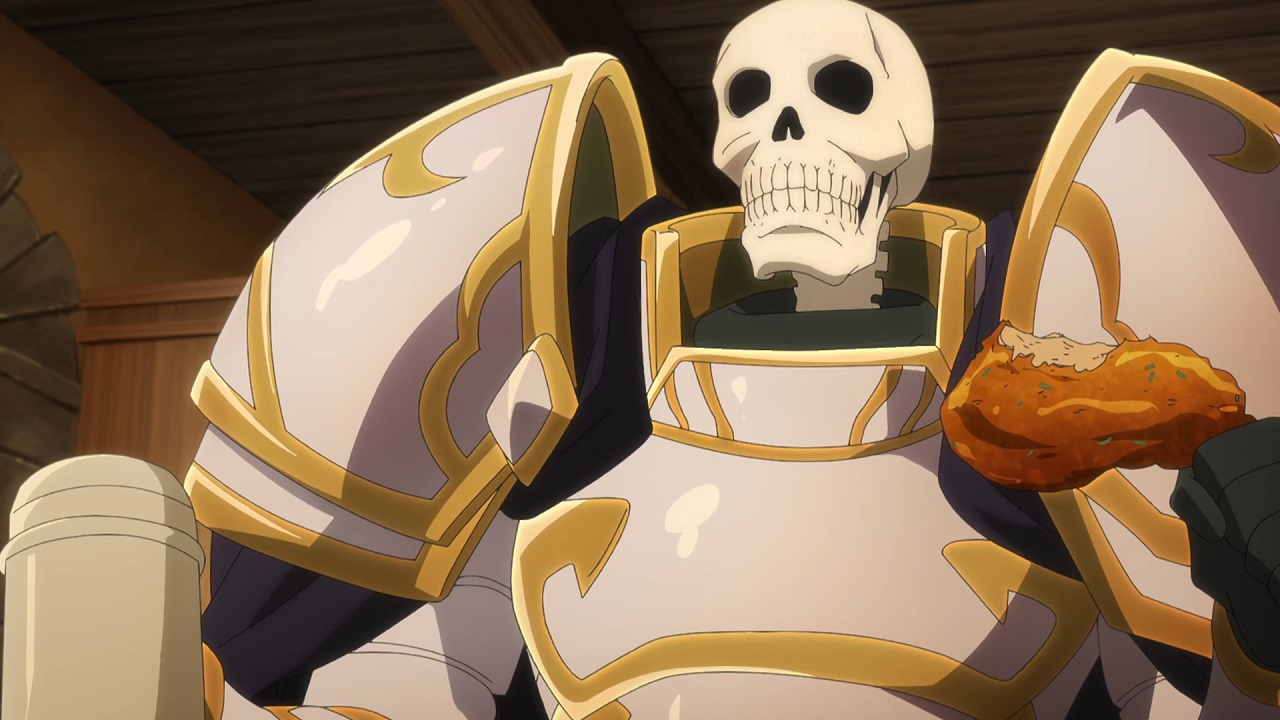
This opens with a graphic, eroticised sexual assault that is revisited mid episode, be warned. The rest of the episode is a fun romp about a gamer waking up as his avatar in the VR game he was playing having been isakaied, only to realise his avatar was a skeleton. Whoops. The manga version of this was far less graphic or titillating and this could serve as a warning on how much more impact moving pictures have opposed to static images, but also that you shouldn’t make rape ‘sexy’. Knowing some of the early plot of the manga version I’m worried the anime will persist in doing this, so I’m a bit wary about this. It’s like taking a dump in a punch bowl: your glass may not have shit in it but just the idea is enough to put you off.
Yuusha, Yamemasu
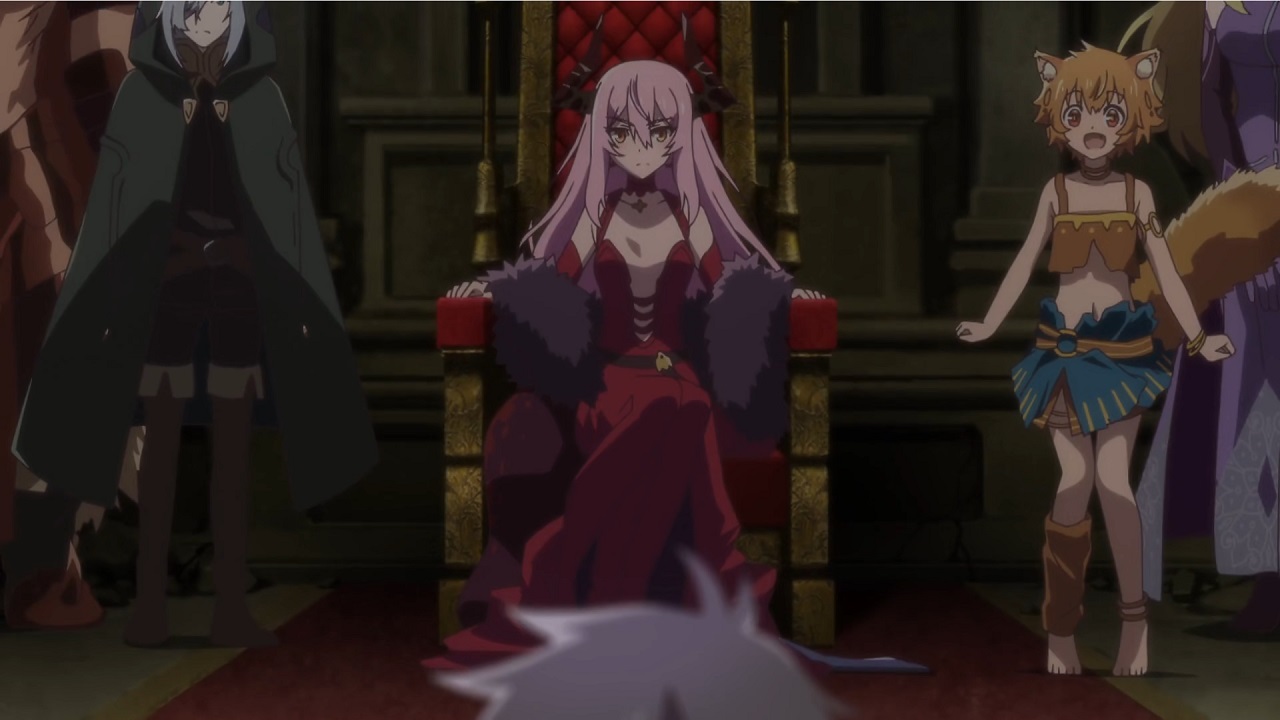
After defeating the Demon Lord, the Hero is mistrusted by the people he saved, so he leaves the kingdom and applies for a job with …the Demon Lord’s army? I read the manga version of this and while it seemed to start off as a sort of comedy it became more serious relatively quickly, so if you’re judging this on the strength of the first episode it’s a bit misleading. The protagonist has a lot more back story than the premise seems to promise, which makes the setting a bit more than your average “isekai but for nobody having been reincarnated into this world” series. Doesn’t mean this is any good of course: I pop these sort of series like candy, pure braindead time wasters.
RPG Fudousan
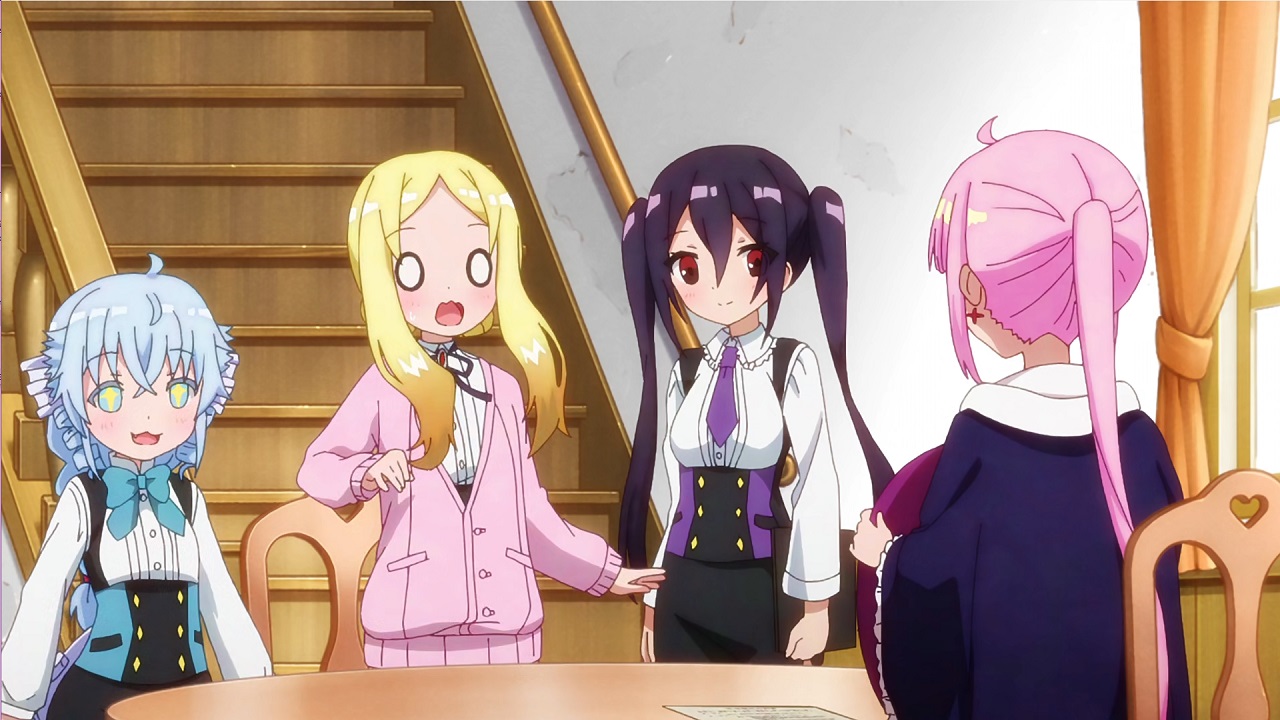
A typical RPG party (magician, priest, warrior and their mascot dragon demihuman) sells real estate in a fantasy world fifteen years after the demon lord was defeated. Harmless slice of moe fare that made me laugh occasionally. Not much to say about this because it doesn’t do that much. The world is the usual anime jumbled up fantasy world that can’t make its mind up to be medieval, Georgian or steampunk Victorian. The characters so far are stereotypes more than people and the jokes are, eh, not always bad. Also, for some reason one of the characters is the spitting image of Rise from Is This Order a Rabbit, so bonus points.
Mahou Tsukai Reimeiki
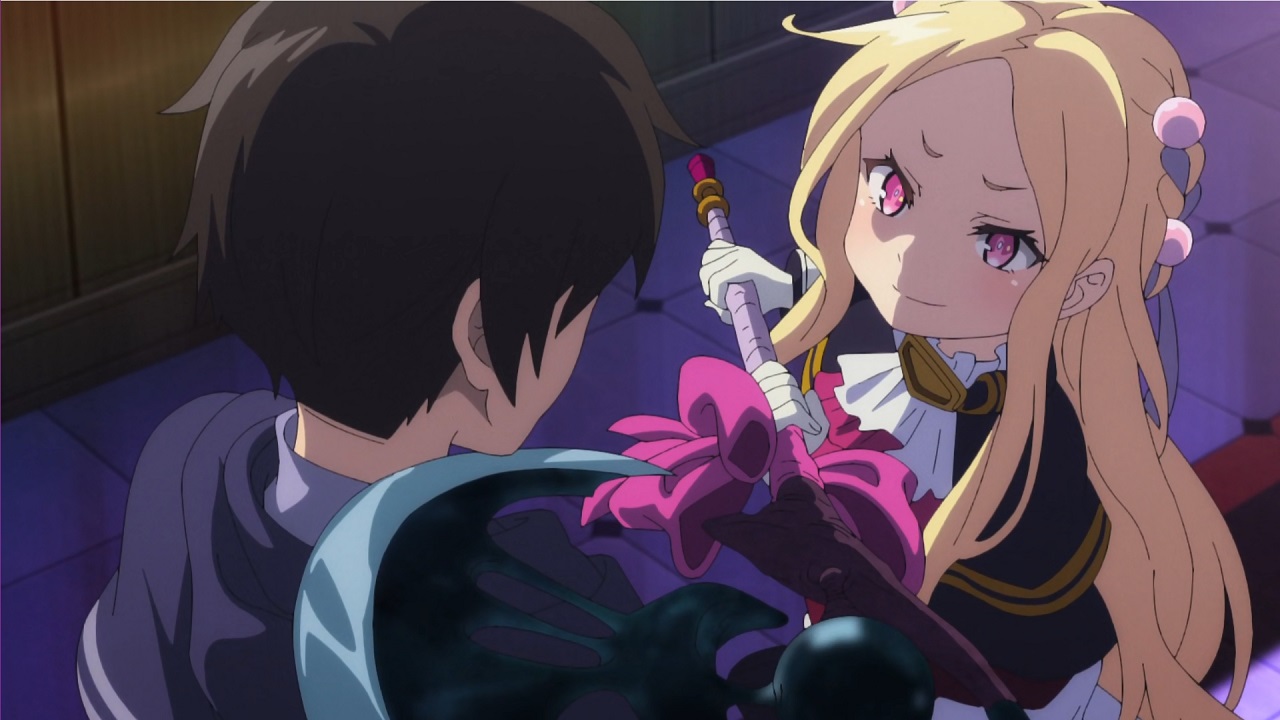
With no memories from before he entered the Royal Academy nor the magic he needs to stay there, Saybil is in a bit of a pinch. If he gets expelled he will lose his memories of the academy too and be left with nothing. His only chance is to go on an expedition for the chair woman of the academy, together with a mixed lot of other students. But what can he do on a dangerous expedition in a world that has only begrudgingly accepted magic and that not everywhere, when he has none and can’t defend himself or others? This is actually a prequel to 2017’s Zero kara Hajimeru Mahou no Sho, which was a fun series mainly due to the chemistry between the protagonists. So far this is lacking in this series, our hero being the usual anime sad boi.
Shachiku-san wa Youjo Yuurei ni Iyasaretai
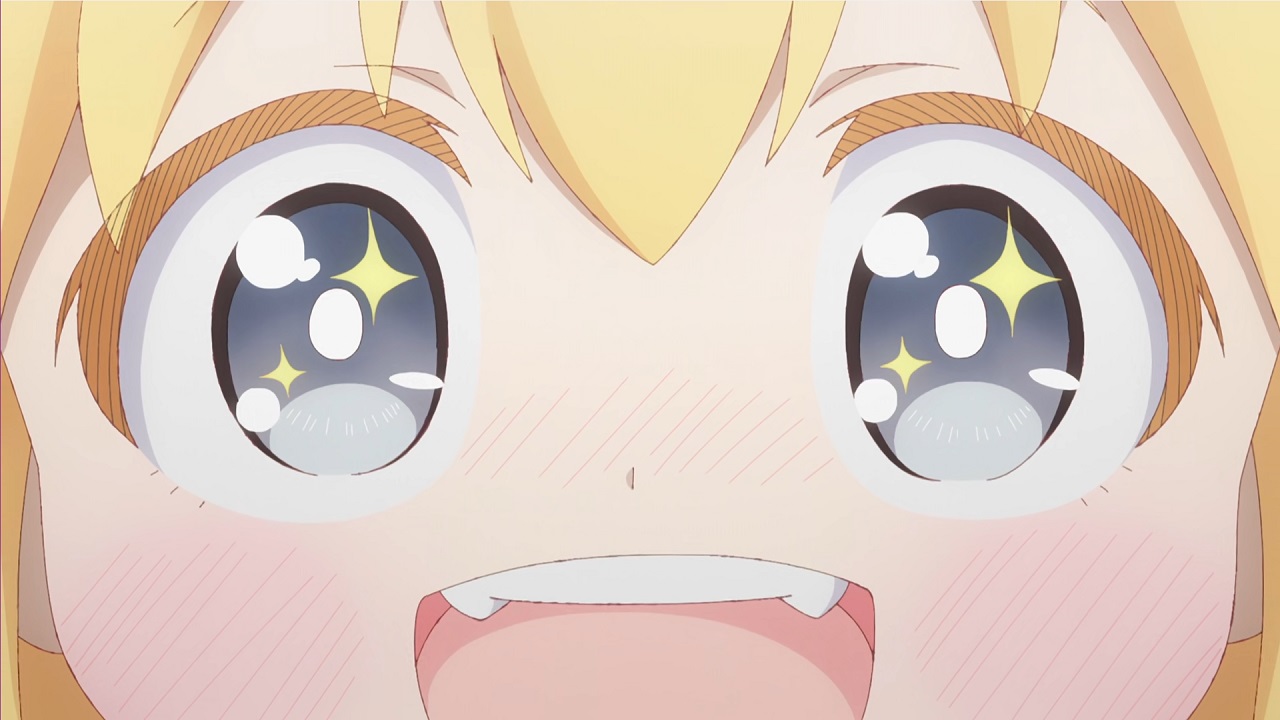
Working overtime because her asshole boss dropped a load of ‘issues’ on her lap expecting them to be fixed next day, Fushihara-san hears a chilling voice late at night in the office, telling her to ‘leave now’. More bothered with making the deadline than any ghosts, she ignores it until it gets on her nerves enough to look for the source. Which turns out to be an adorable ghost baby just concerned about her welfare. This first epside was somewhat slow and plodding but the ghost toddler is cute. Don’t think too hard about where she comes from…
Koi wa Sekai Seifuku no Ato de
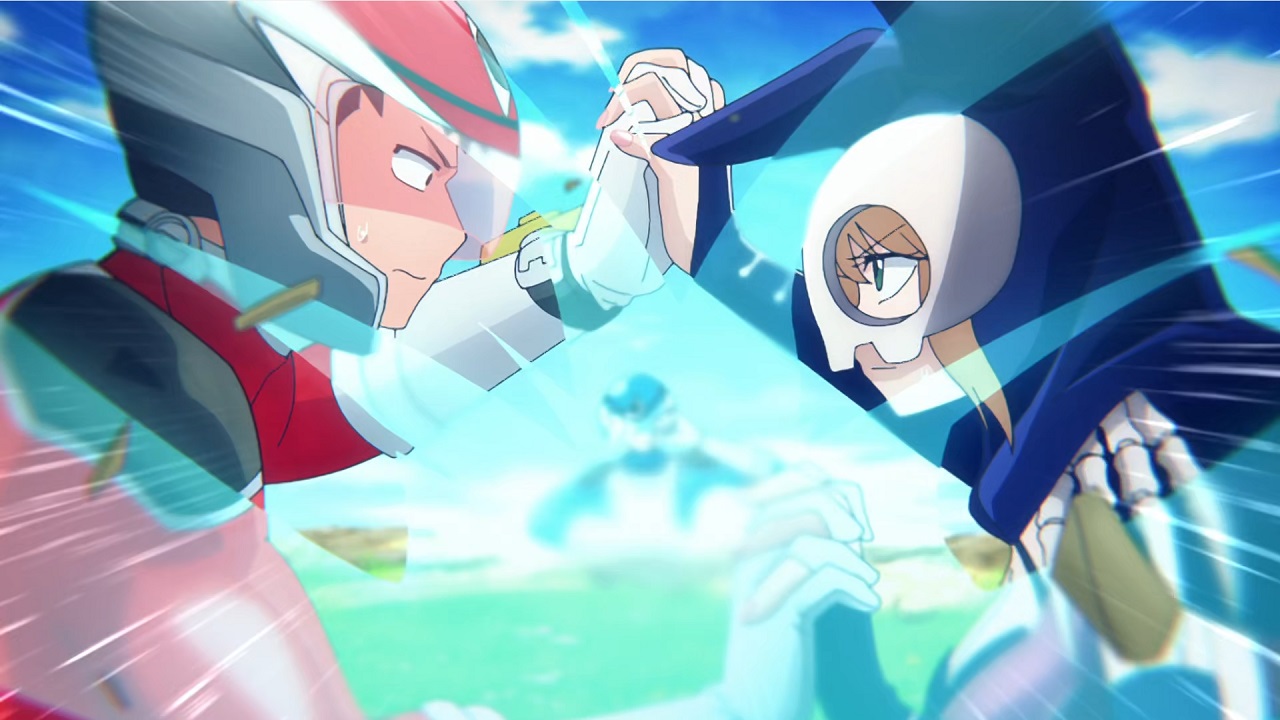
The simple minded red leader of the Gelato Five super sentai squad falls in love with one of the evil organisation Gekko’s lieutenants, the Shinigami Princess. Of course they have to keep their love a secret, so their dates tend to happen in the middle of battle between their respective organisations as Gekko unleashes its monster of the week before being defeated. A simple gimmick, but decently executed and I like both of them, especially Red.
Kawaii Dake ja Nai Shikimori-san
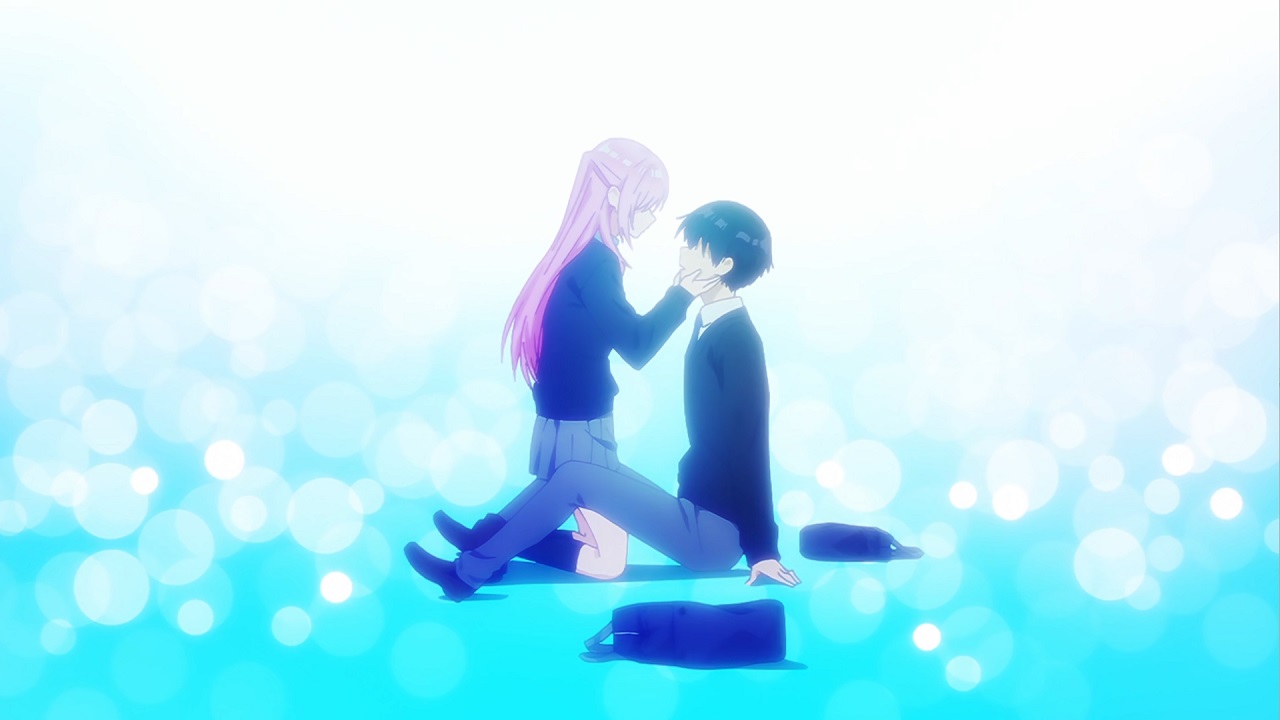
A romance anime that actually starts with the main couple already together. Izumi is your typical boring protagonist, only distinguished by his incredible bad luck, while his girlfriend Shikimori is not just beautiful, cute but also very cool when she protects him from the consequences of his bad luck. As is often the case, it’s easy to see what he sees in her, not so much what she sees in him. Indeed, I found myself getting increasingly annoyed at him in the opening minutes for being such a boring doofus, but once Shikimori was on the scene things livened up. I do hope that his character gets fleshened out a bit more, that he’s going to be able to do more than be unlucky or admiring his cool girlfriend. Visually this is quite a nice looking anime, especially in the action scenes when Shikimori gets to strut her stuff. I do worry that Izumi will remain as passive as he was in the first episode.
Aharen-san wa Hakarenai
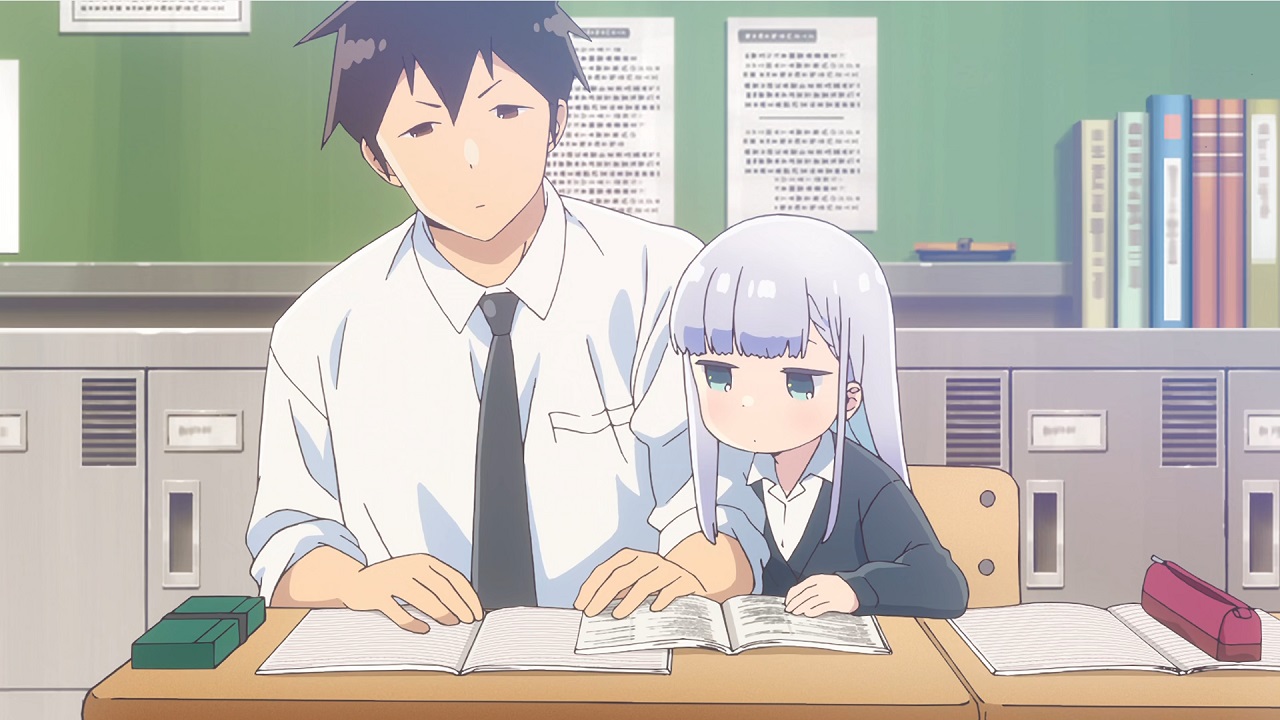
Raidou is big and imposing, has a scary face but no friends. Vowing to do better in high school he tries to befriend the small, very very soft spoken girl next to him. Aharen-san not only turns out to be soft spoken, she also has no sense of social distance. Hilarity ensues. Based on a gag manga, the initial setup is a bit meh and luckily the casts broadens out from the second episode. This made me laugh a couple of times but really is a series that you need to watch week to week or you’d get bored of it.
Kono Healer, Mendokusai
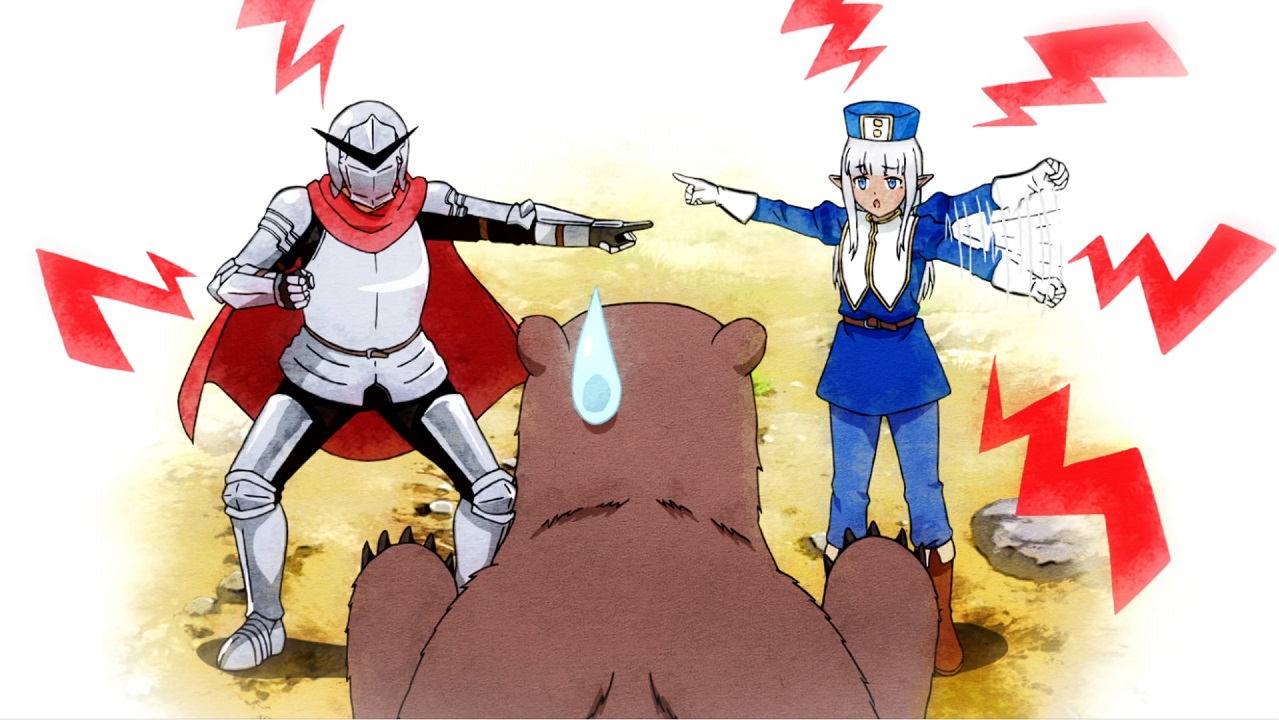
Alvin the warrior is in a deadly fight with a Mostly Bear monster when the dark elf healer Carla asks him if he needs healing and why he answers yes, she wonders in that case, why he doesn’t immediately prostate himself before her if he needs it so badly? If you think that’s annoying, it’s only the start and Carla is the perfect mix of obnoxious and funny, with Alvin and the poor bear monster as the straight man (and woman). The plot basically exists just to provide standup fodder and this is all done manzai style, so if you’re allergic to that sort of comedy, skip this. Me, I found the humour and timing to be excellent in the first episode. It is all a bit slower than in your average American standup routine, but it worked for me but then I’m a Steward Lee fan.
Deaimon
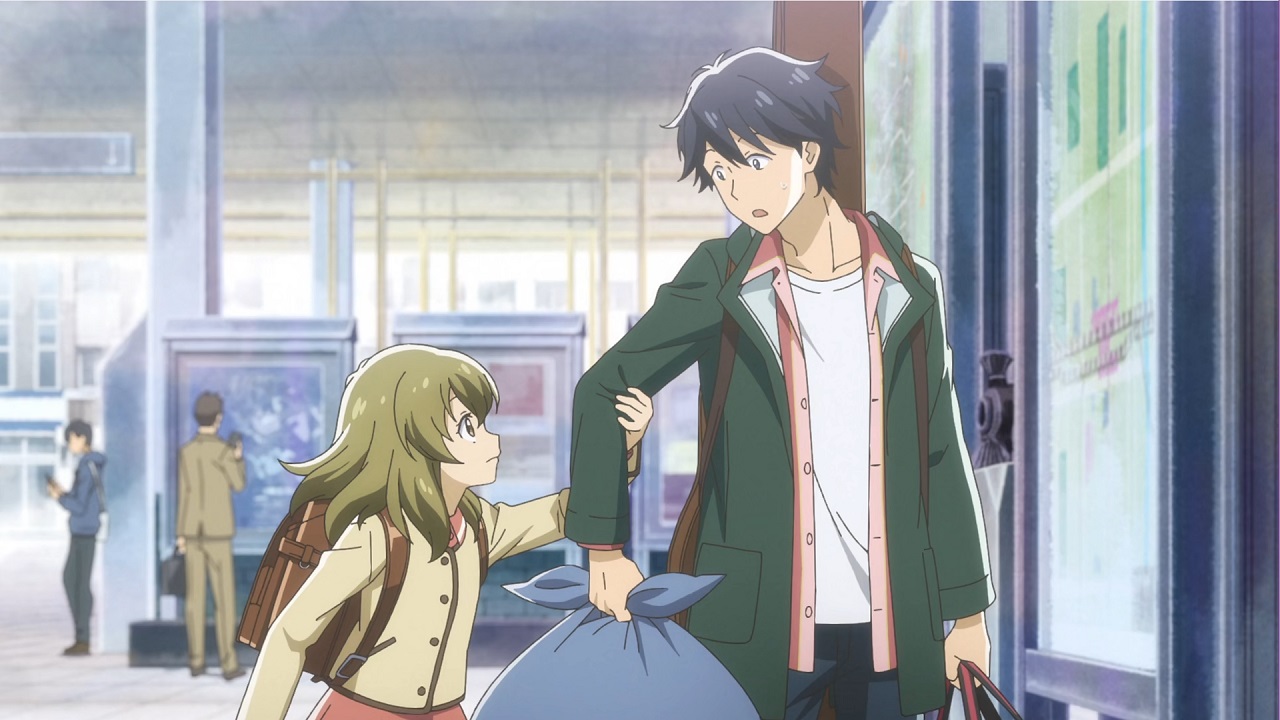
On the same day as his band breaks up, thirtysomething Nagomu gets a letter from his mother that his father is in hospital, so he decides to return to his hometown only to find out it was just piles. Nevertheless he decides to stay and work at the family business, a traditional Japanese sweets shop. His father, still upset he left for Tokyo years ago is opposed and tells him he already has a heir: Itsuka, a ten year old girl abandoned by her parents and taken in by him. She immediately distrusts Nagomu for having abandoned his duty. His mother however asks him to be a father figure for her, as she thinks it’s only him she can be honest with as Itsuka is determined to keep earning the respect of Nagomu’s parents so as not to be left alone again. A fairly dark background for what’s mostly a fluffy light show about somebody trust into unexpected parentdom, but then a lot of these shows have something like that. If you liked shows like Amaama to Inazuma or Usagi Drop, you’ll probably like this one as well. Animation is good too, with special focus on the sweets making.
Love Live! Nijigasaki Gakuen School Idol Doukoukai
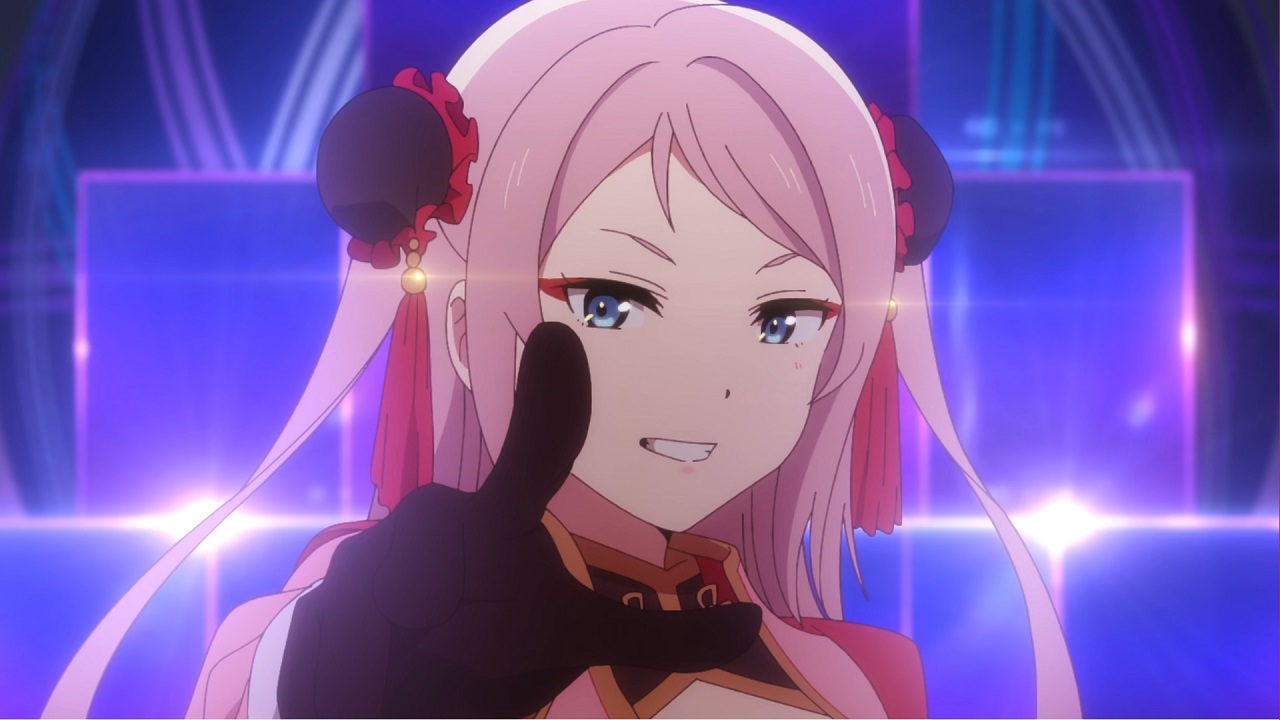
The first season felt like a series of introduction episodes and then it was over, as this was the one Love Live series in which the cast didn’t have to unite to save the school. Because of that it felt unstructured and I didn’t get much grasp on the various idols introduced. This season is off to a better start if only because of having a proper antagonist, the magnificent Lanzhu, a Chinese diva, who wants nothing to do with their feel good fans and idols are equal hippie thinking. That sort of conflict about what beimg an idol really means is always a good way to spice things up when a series is too sappy. The animation and music quality is as expected from a Love Live series: gorgeous.
Spy x Family
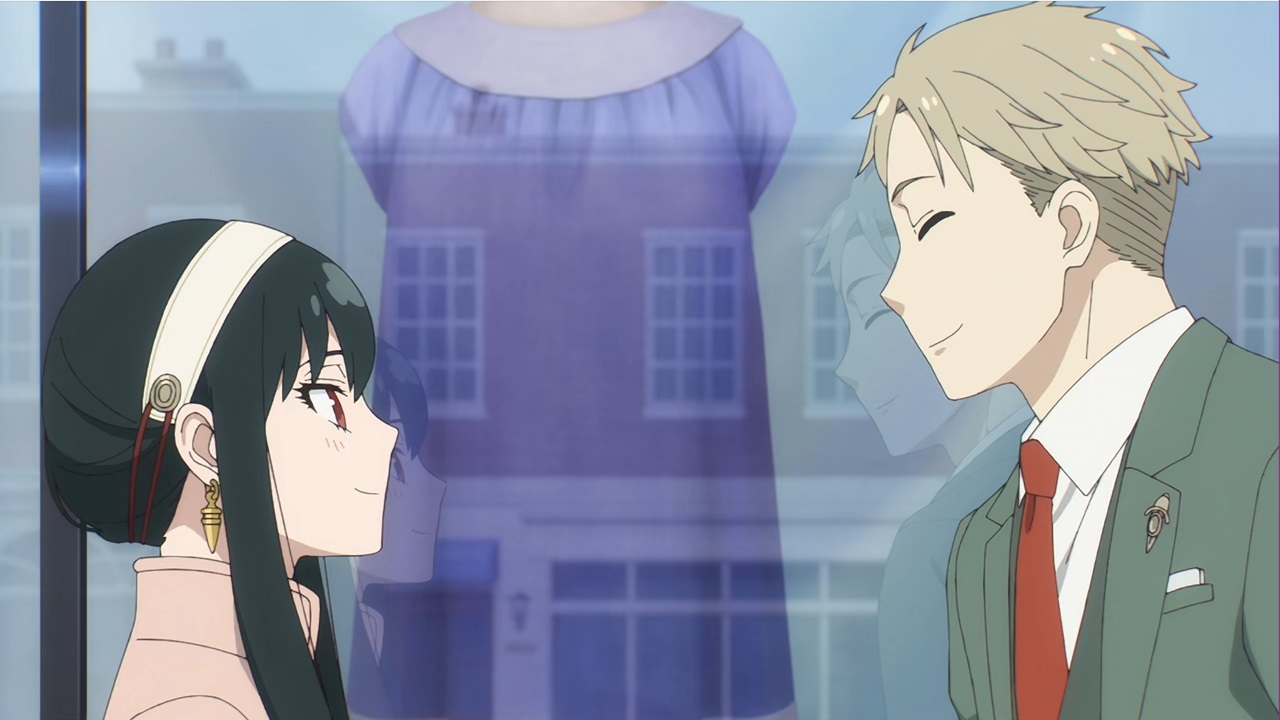
A top western spy needs to get closer to a leader of the East but the only time his target is out in public is at the annual open day of his kid’s school. So now the spy needs a family: a child to enroll the school (some girl from an orphanage who turns out to be a telepath) and a wife to complete the perfect nuclear family (a civil servant needing to pretend she’s married for her little brother’s sake and also she’s an assassin by night). Cue oodles of stylised spy comedy. This is incredibly fun. Loid the spy and Yor the assassins are both dumbasses in their own way, while Anya the telepath kid is much smarter but still only six. She plays along with the whole charade because a) it gets her out of the terrible orphanage she was in and b) spies and assassins are very exciting indeed. This is originally a Shonen Jump manga so the sexual politics are awful as expected, especially in the second episode with its ‘single women over 27 are suspicious’ plot.
Kaguya-sama wa Kokurasetai: Ultra Romantic
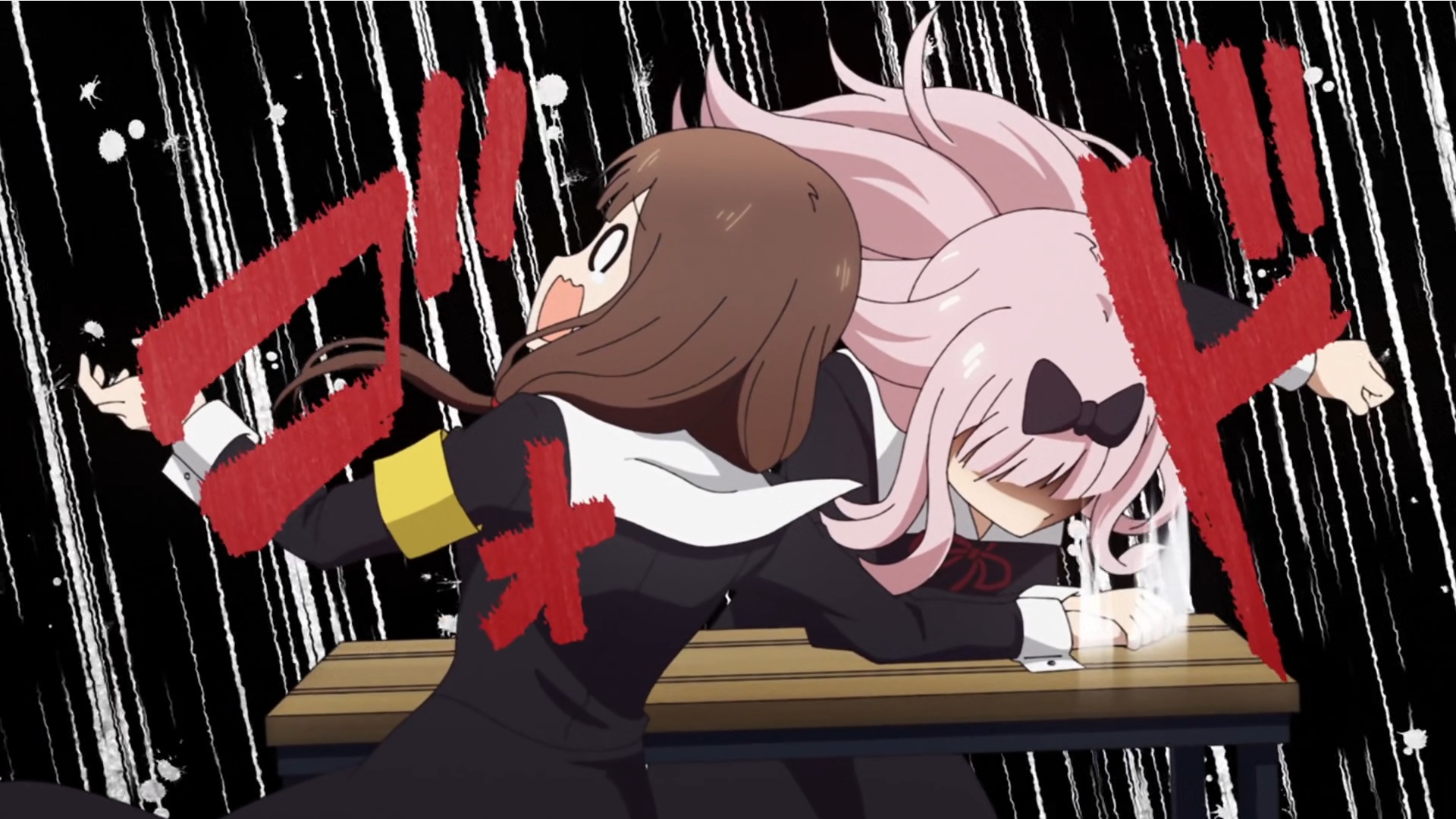
The love war between the student council president and his vice president continues, in which each loves the other but wants them to confess first to have the upper hand in their relationship. The third season already and moreso than the first two it seems to include the entire student council in its stories, not just Shirogane and Kaguya trying to one up each other. If you liked the first two series, you’ll like this one. Certainly made me laugh.
Genjitsu Machikado Mazoku 2-Choume
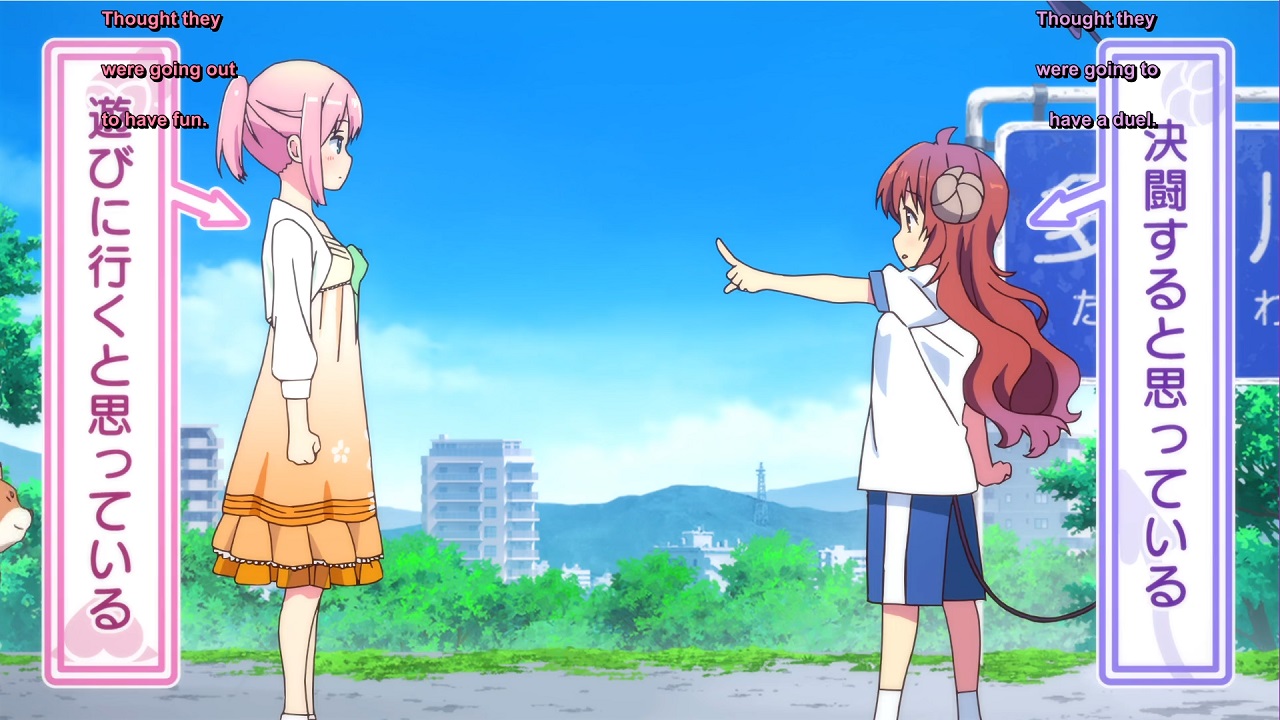
The adorkable Shadow Mistress Yuko, better known as Shamiko is still trying to get the upper hand over magical girl Momo but it’s hard when Shamiko challenges her but she takes it as an invitation for a date. The second season of Genjitsu Machikado Mazoku/Demon Girl Next Door starts where the first left off and hasn’t lost any of its charm. Even if the start was a bit confusing, jumping in media res then having a flashback as to why Momo didn’t realise Shamiko was challenging her. Pretty soon the episode settled down in the familiar patterns of the first series, with Shamiko earnestly trying to be a proper demon girl but never quite succeeding, while Momo is her usual competent but lonely and easily depressed self. As with the first series, there were a lot of rapid fire gags and while not every one landed, they made me laugh more often than not.
Heroine Taru Mono! Kiraware Heroine to Naisho no Oshigoto
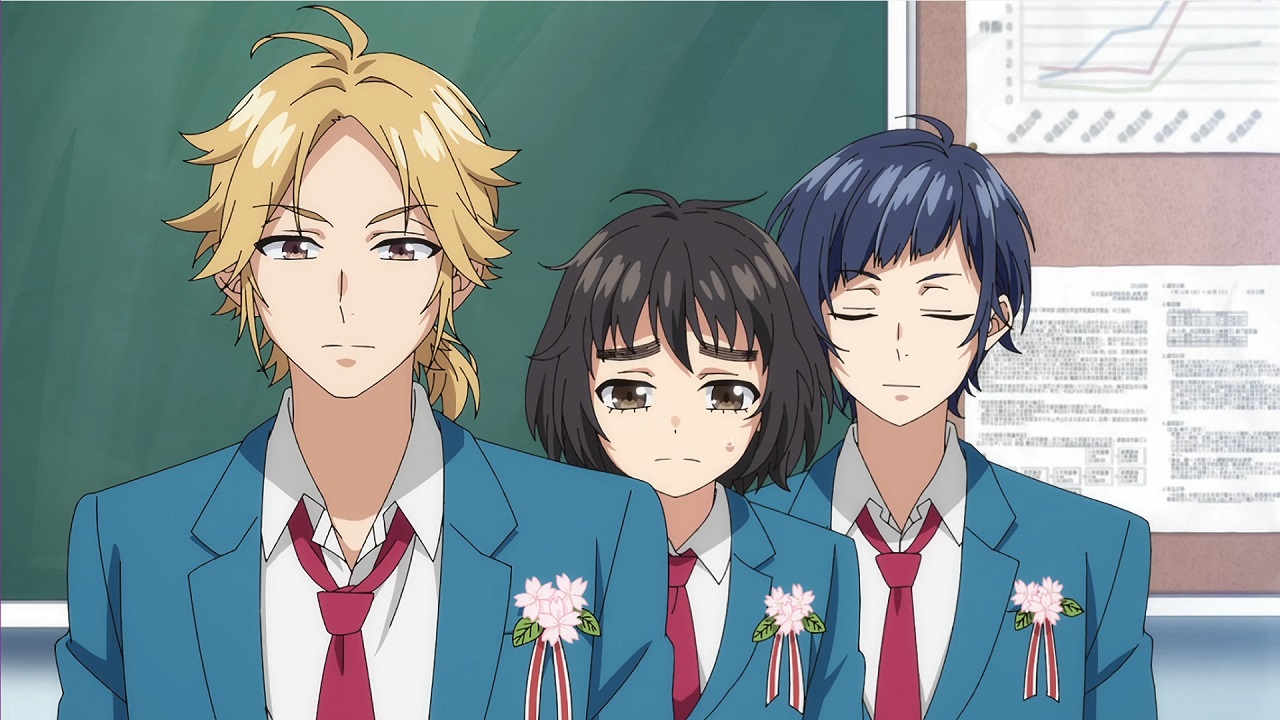
Hiyori Suzumi moved from the sticks to Tokyo to get into a school with a good track team because she loves the sport and wants to make the nationals. When her father gets in an accident and is unable to work as a fisherman for the foreseeable future, she decides to get a part time job to help pay for her costs of living. Meanwhile school is not quite what she expected: she makes some friends in her class and on the track team, but the two boys she sits inbetween are obnoxious assholes even though half the girls seem to fancy them just because they’re idols. She herself has never paid much attention to idols, but now she has to as she scored a job as their manager… Gods know there are lots of interchangeable guydoll with bland female viewpoint character shows, but this is different because Hiyori is anything but bland. It helps that the whole first episode was about following her and her dreams, which had nothing to do with idols or managing them. Similarly, the two idols too have a bit of a bite to them, aren’t your usual cookie cutter cuties. For all their professionalism in public there’s a sense that they’re not very good or happy at being the sort of idols they’re being made into. Visually too this is one of the better looking shows this season and not just with the song routines.
Healer Girl
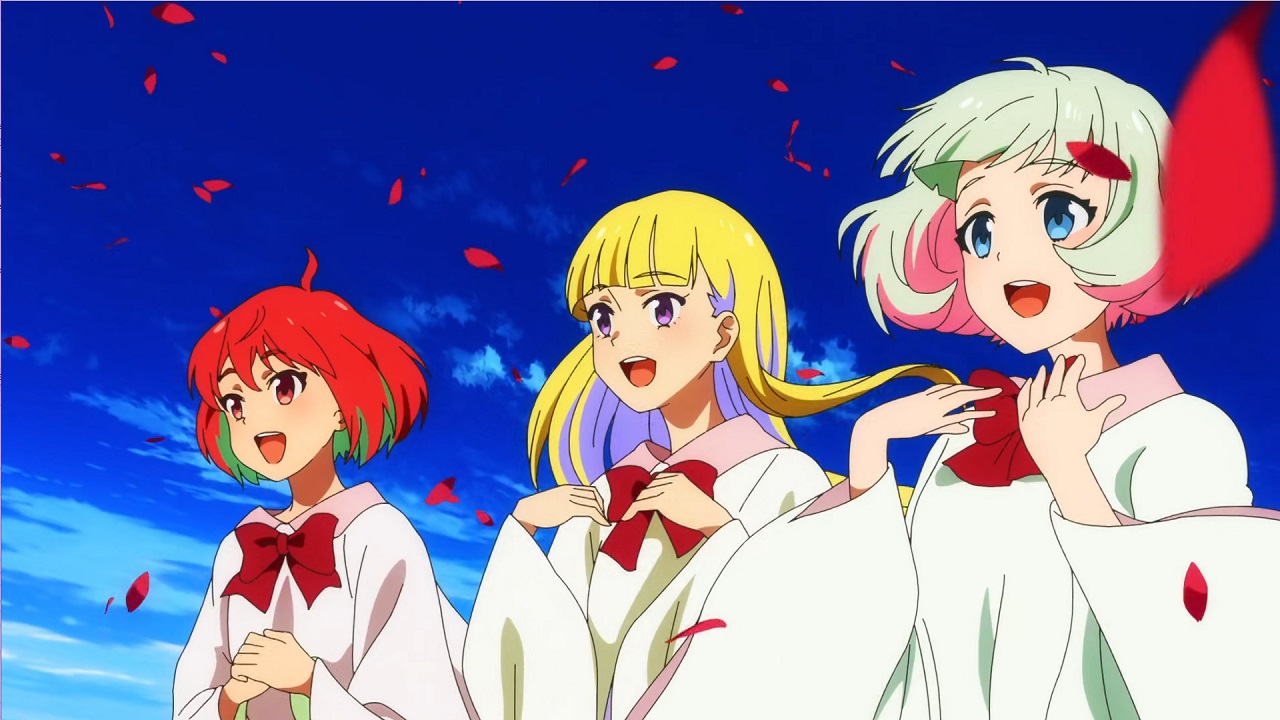
Next to western and eastern there’s a third branch of medicine: vocal medicine, healing through song. Fujii Kana is an apprentice healer girl who has been obsessed with vocal medicine ever her first encounter with a healer girl. She and her fellow apprentices work in the clinic run by their mentor, learning the trade, aiming to become a sort of idol doctor. Or magical girl, because this is pretty much an old school non-combat magical girl show. The idol elements are not so much in the show itself but rather the main characters are all part of an idol unit of the same name as the show. Which means there’s a lot of singing in this show and all of it is subtitled even, a wonder considering how lazy most streaming sites are about that sort of thing. Honestly, this is almost a musical and the third episode especially put a huge grin on my face.