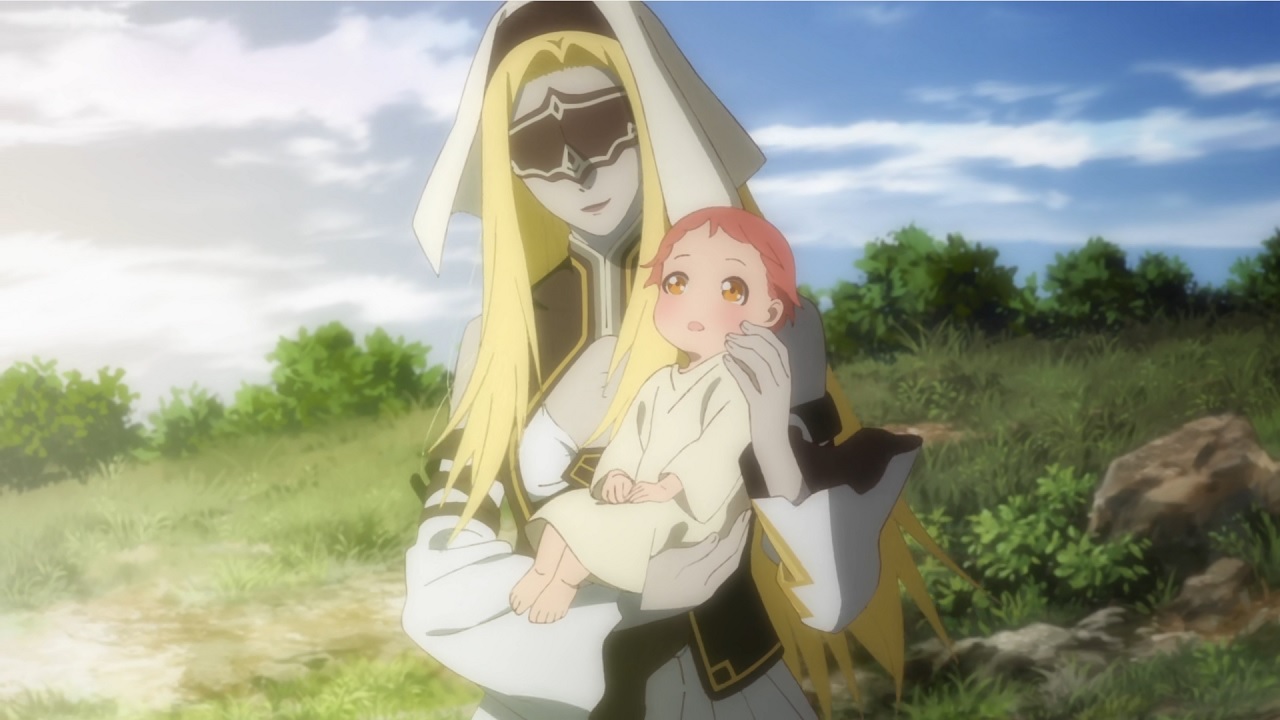
I think this scene from Sono Bisque Doll Wa Koi Wo Suru/My Dress-Up Darling episode 11 is the first time Marin and Gojou both realise they are attracted to each other and realise the other is attracted to them too at the same time:
What I like about this scene is how it showcases Gojou and Marin’s dynamic perfectly. They’re in a love hotel to do a particular cosplay because Marin noticed the room was cheap and matched the setting of the manga she’s trying to cosplay the heroine from, only realising it was a love hotel when they were actually in front of it. After the initial surprise, neither of them was bothered by it because both of them were so focused on getting the pictures just right. Even when Gojou suggests Marin gets on top of him, it’s only to match the picture to the manga panel. No lewd thoughts enter either his or Marin’s head; she’s only concerned that she doesn’t hurt him by sitting on his lap. But notice the coyness in how the scene is directed. The little pauses, the staging, the camera angles. Its protagonists may not be aware of how erotic this all could be, the show itself certainly is. Yet for Marin and Gojou, it’s only when the moaning of the woman getting railed next door filter through that they become aware of each other as sexual beings. It’s only then that Gojou notices that an extremely attractive girl is straddling his crotch. It’s only when he puts his hands on her waist that Marin realises a not too bad looking boy is lying beneath her. Both of them freeze but seem to be building up to something to realise that sudden sexual tension when they’re cock blocked by the telephone ringing. While it’s not directly addressed afterwards, it is clear that both of them are now very aware of each other as romantic and sexual partners…
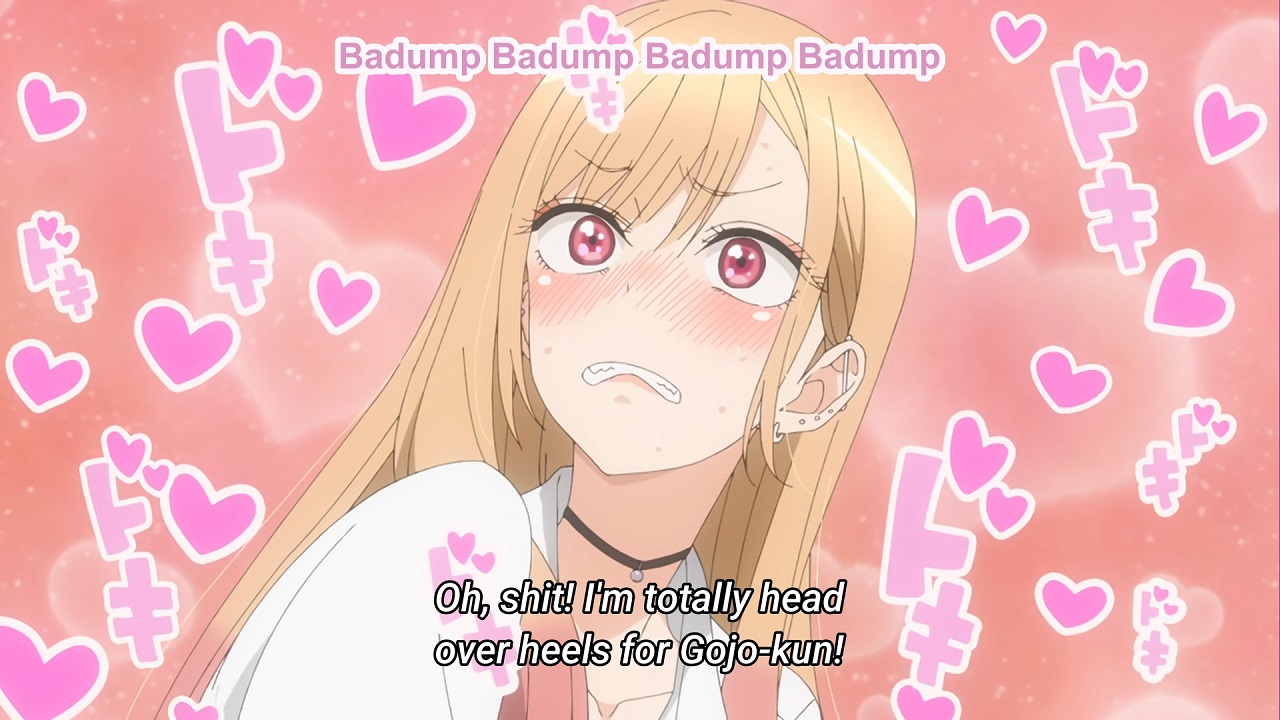
Marin of course had realised she “wuved” Gojou a long time ago, in episode six to be precise. It’s a very pure love, including rose petals surrounding Gojou when looked at through Marin’s eyes. She thinks he’s adorable, cute, likes the way he can talk so earnestly and honestly with his grandfather. She admires his cooking skills, not to mention his dress and costume making skills. From the very first time they talked she has been comfortable around him, talking to him as a friend. The same trust is seen when Gojou starts making her cosplay costumes. She has no problems with him measuring her, or of posing and undressing when needed. Even when she ran into him in the school’s home economics room she had no problem stripping right in front of him to put up her own failed attempt at a costume. Her love for Gojou fits with her love for the characters she cosplays. While many of them are very horny indeed, she thinks of them as cute and seems to be blind to their eroticism. She can even innocently admire the boob bag Gojou created for her first costume, in front of him. It’s only after she realises she loves him that she also starts thinking of him in any sexual way. Even then, this doesn’t change the way she treats him; she just gets self conscious a little bit around him, unless deep in cosplay geeking.
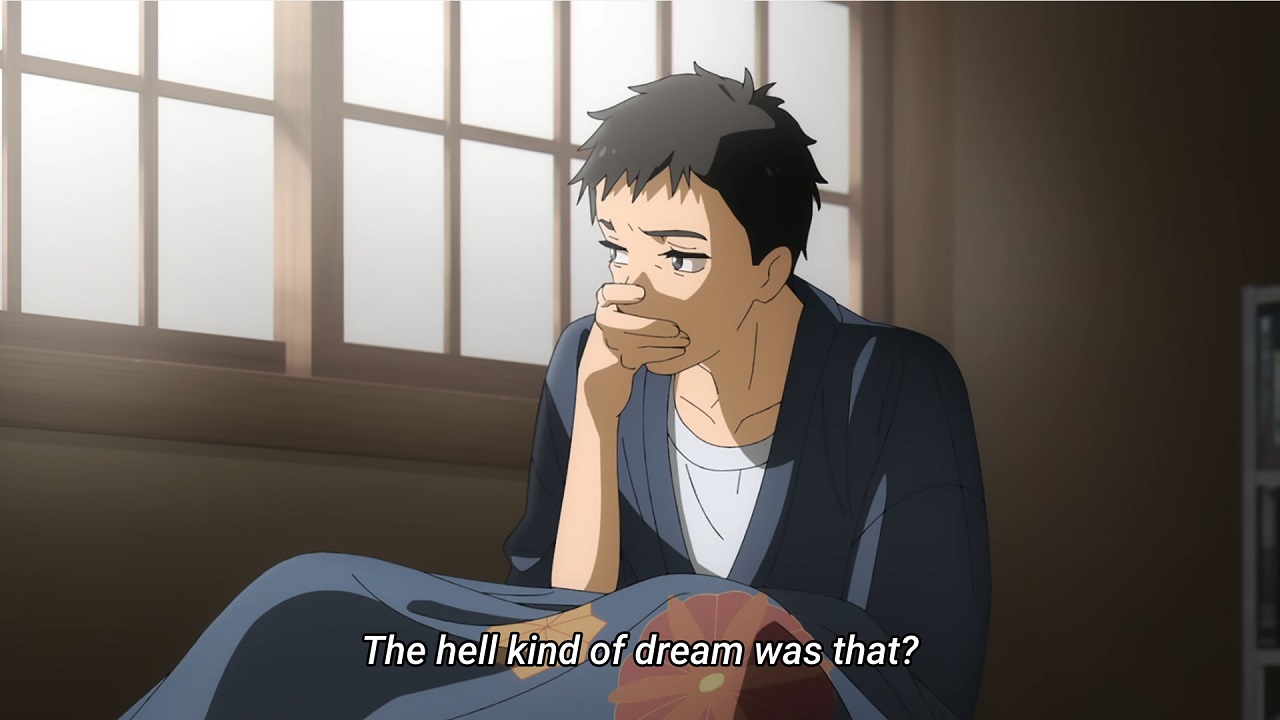
Gojou doesn’t have that luxury. He is very aware from the very start of how attractive Marin is. To the point of waking up from a wet dream starring her in episode 3. Which is a thing that happens to fifteen year old boys, but not something you see a lot in anime. Having always been a loner because of his love for Hina dolls and his disinterest in normal things boys like, with no experience hanging out with girls, he also gets incredibly flustered having to deal with Marin, who basically has no boundaries when it comes to cosplay. Understandable, but very much an anime cliche at first. But unlike so many other anime romcom protagonists, Gojou gets over his awkwardness, gets more comfortable around Marin, especially when he gets absorbed in the technical challenges of her outfits. Which is also what you see in this scene: he’s never aware of the sexual undertones until he’s brought out of his concentration. But once that happened, he’s very aware of Marin, not just as an attractive girl but as somebody he loves, even if that isn’t spelled out for him like it was for her.
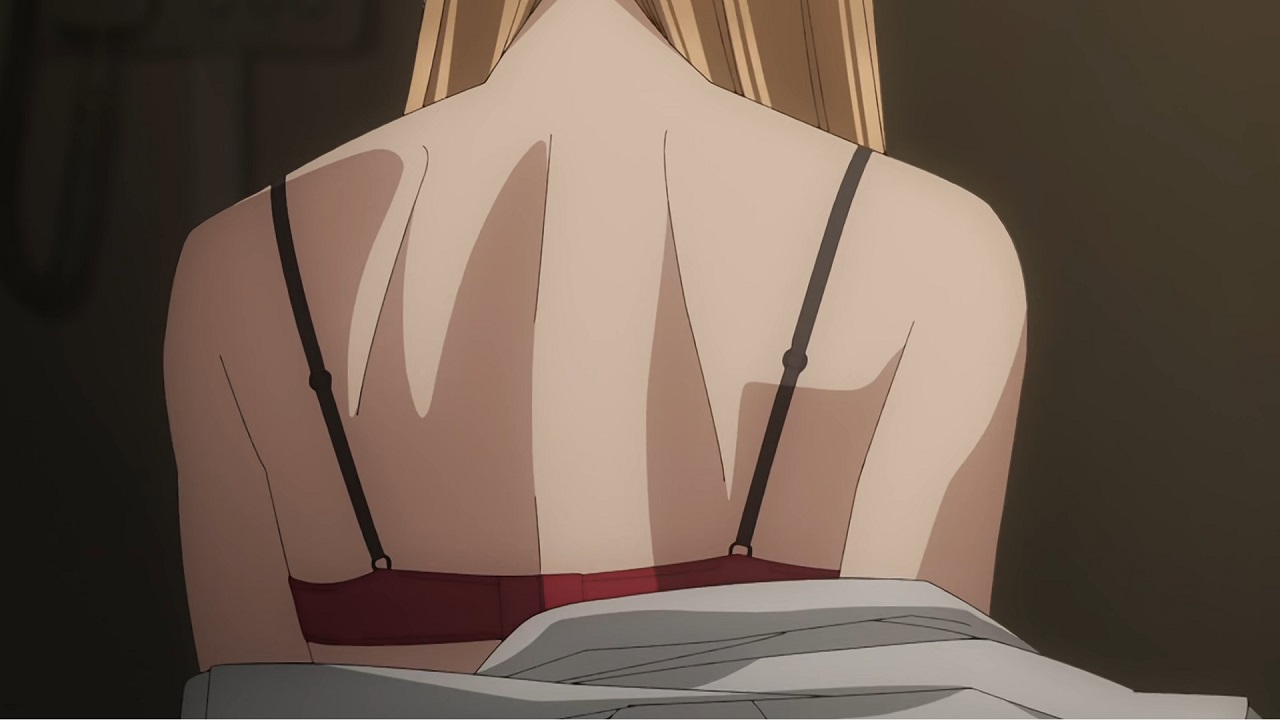
As said, while Marin and Gojou mostly are unaware of the sexual undertones in their relationship, the show as a whole clearly is. There’s a lot of fanservice in the show, most of it centered on Marin –it knows it audience– but also in a lesser manner on the other significant female characters, the sister duo with whom they have a cosplay team-up in episode six to ten. In a show that revolves around creating cosplay costumes, there’s a lot of room for Marin to undress or pose in skimpy costumes and the camera angles don’t always help either. This sort of fanservice can be incredibly annoying, but here it works. Because unlike say in a series like Aiura, which used horniness just as something to distinguish itself from other slice of moe series, here it’s used functionally. The fanservice is consistently used to heighten the thirstiness of scenes where it is relevant, to give an impression of what Gojou and to a lesser extend Marin would be feeling. It’s almost exclusive to scenes in which the two are alone and almost always we have Gojou or Marin become aware of it as well. Like in the scene from episode one from which this picture was taken, where Marin undresses to show Gojou her costume and he is flustered of it but she too is not quite calm about it. It’s the underlying horniness that makes him tearing into her because her costume is so badly made moments later so hilarious. The same goes for the love hotel scene: the underlying horniness builds up towards the climax of the scene when both realise what they are doing and what it looks like. It’s this that makes the fanservice in this show enjoyable to me, because it’s in service to the character development as well, not just eye candy. It fits a romcom about horny teenagers.